
Jennifer Linton Reesman, PhD, ABPP
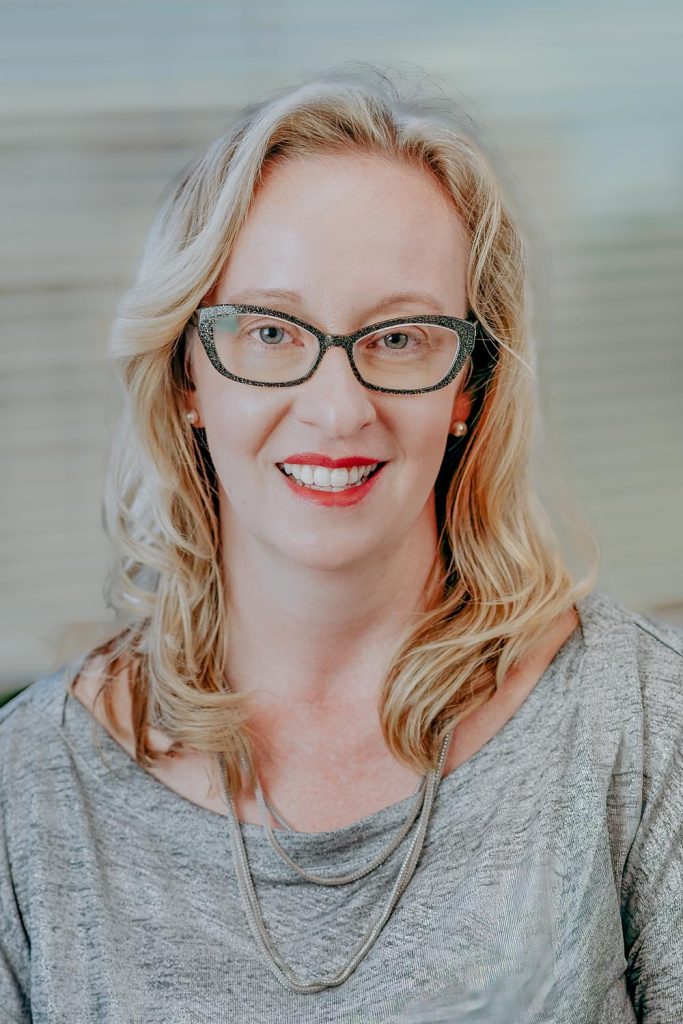
Board-Certified Clinical and Pediatric Neuropsychologist
Jennifer Linton Reesman, PhD, ABPP
Jennifer Linton Reesman, PhD, ABPP works with children, adolescents, and adults whose learning, attention, emotional, or neurological profiles have not been fully explained by prior evaluations or interventions. Her training is in clinical and pediatric neuropsychology, with a focus on complex presentations where cognitive, developmental, and behavioral factors overlap.
A consistent theme in her work is translating complex findings into language families can actually use. Neuropsychological results are not treated as standalone labels, but as explanations of how a person thinks, learns, and functions in daily life. Feedback sessions are structured to help families understand not only what is being identified, but how it shows up in school, home, and social environments.
Jennifer Linton Reesman, PhD, ABPP is fluent in American Sign Language and conducts neuropsychological evaluations directly in ASL for Deaf and Hard of Hearing individuals. These evaluations are completed without the use of an interpreter, allowing communication to remain fully accessible and integrated throughout the assessment process. This work has been a longstanding and central part of her clinical practice.
Feedback is often provided in a way that is developmentally appropriate for children and adolescents as well as adults. When appropriate, children are helped to understand their own profile in clear, age-sensitive language so that the evaluation becomes something they can recognize in themselves, rather than something discussed only between adults.
Across all ages, the focus remains on building a coherent understanding of strengths and challenges that can guide practical next steps in education, treatment, and daily functioning.
ADHD and attention disorders across the lifespan
Areas of Clinical Expertise
- Autism spectrum disorders, pediatric through adult
- Learning disorders: dyslexia, dysgraphia, dyscalculia
- Traumatic brain injury and concussion
- Memory concerns and cognitive decline in older adults
- Executive functioning difficulties
- Developmental disorders in young children
- Pre-surgical evaluation, including cochlear implant candidacy
- Evaluation in American Sign Language
- Evaluation for Deaf and Hard of Hearing individuals
- Second opinion evaluations
- Forensic and legal neuropsychological consultation
coherence and ASL
ASL-Accessible Evaluation
There are very few neuropsychologists in the country who provide full neuropsychological evaluations directly in American Sign Language. In this work, assessments are conducted in ASL from start to finish, without the use of an interpreter in the room.
This approach is not simply a matter of translation. Standardized neuropsychological tools are adapted carefully so that linguistic accessibility is achieved without losing the integrity of what the measures are designed to assess. The goal is to ensure that test results reflect cognitive functioning itself, rather than the indirect effects of communication barriers.
When evaluation is conducted through an interpreter, meaning can shift in subtle ways that affect timing, nuance, and cognitive load. Direct administration in ASL reduces those variables, allowing the clinician to observe problem-solving, reasoning, attention, and learning in a way that is more directly connected to the individual’s actual language system.
The underlying principle is straightforward. Neuropsychological results should reflect how a person’s brain functions in a way that is as true to their real communication and processing style as possible. The purpose of accessibility in this context is not only inclusion, but clinical accuracy, ensuring that conclusions are based on ability rather than mediated communication.

How an Evaluation Actually Goes
The process begins before any testing takes place. Available records are reviewed in advance, including prior evaluations, school documents, and relevant medical or developmental history. This allows the initial session to build on existing information rather than requiring families to restate the full history from the beginning.
Families often come in with a sense that something is not fully explained, even if the exact concern is difficult to define. A child may be performing inconsistently at school despite clear signs of ability in other areas. A pediatrician may have raised questions about attention, development, or learning. In other cases, families may have received different explanations from multiple clinicians without a clear sense of which direction best fits the overall picture. The evaluation is structured to address the specific concern that brought the family in, rather than a generalized set of assumptions.
Testing is designed to clarify how a person is thinking, learning, and functioning across different domains, with attention to both strengths and areas of difficulty. The goal is to understand not only whether there is a diagnosable condition, but how that profile appears in real-life settings such as school performance, daily routines, or workplace demands.
Once the evaluation is complete, findings are organized into a comprehensive report that is typically completed within approximately two weeks. The process concludes with a feedback session that focuses on explanation and interpretation rather than simply delivering results. Families are walked through what was found, how it connects to their concerns, and what steps may be helpful moving forward, so the evaluation becomes something usable rather than something to interpret alone.
Outside the Office
Jennifer Linton Reesman, PhD, ABPP has directed federal training projects preparing clinicians to serve Deaf and Hard of Hearing populations, and has served on APA task forces on assessment and intervention with people with disabilities. She supervises trainees regularly, which is, in her view, one of the better ways to stay sharp. You explain things badly until you understand them well enough to teach.
Connect with Jennifer Linton Reesman, PhD, ABPP
Email is the fastest way to reach her.
Contact: drjen@reesmanneuropsychology.com
Independent practice site: reesmanneuropsychology.com | Phone: (240) 552-9322
Referral Relationships
Referrals come from families, pediatricians, neurologists, psychiatrists, schools, therapists, and attorneys. Common reasons:
- Educational evaluation and IEP documentation
- Medical consultation and pre-surgical evaluation, including cochlear implant candidacy
- Legal and forensic neuropsychological consultation
- Second opinions when prior findings don’t quite hold up
- Diagnostic clarity for presentations that overlap in confusing ways
How we work
Research and Public Work
Jennifer Linton Reesman, PhD, ABPP is co-author of Neurodevelopment in the Post-Pandemic World (Oxford University Press, 2024), which examines how disruptions during the COVID-19 era have influenced children’s development, learning, behavior, and mental health. The work focuses on how changes in schooling, social interaction, and access to services have shaped neurodevelopmental trajectories in ways that continue to be observed in clinical practice.
Her peer-reviewed research has been published in journals including The Clinical Neuropsychologist, Archives of Clinical Neuropsychology, and Nature Reviews Psychology, among others. Her scholarly work spans pediatric neuropsychology, traumatic brain injury, autism assessment, and neurodevelopmental evaluation in children with sensory disabilities, including those who are Deaf or hard of hearing.
In addition to academic publications, her work has been featured in national and regional media outlets, including The Washington Post, The New York Times, and NPR, as well as DC-area news organizations. She has also participated in professional and public-facing discussions through podcasts such as Navigating Neuropsychology and The Special Ed Strategist Podcast, where topics have included neurodevelopment, assessment practices, and challenges in access to specialized care.
Across these contributions, the focus remains consistent: translating complex neuropsychological research into insights that can inform real-world understanding of development, learning, and mental health in children, adolescents, and adults.